Your brain’s filter system decides what you notice, who you meet, and which opportunities surface—but most people never learn they can reprogram it on purpose.
The story
Before Chapter 6 of _The Journey – I wish I knew this before I was 21_:
– You assume your “personality” is mostly fixed and shaped by school, family, culture.
– You treat your brain like a chaotic browser with 147 tabs open.
– “Visualization” sounds like wishful thinking, not a serious tool.
– You mistake what you *notice* for “objective reality,” instead of a tiny filtered slice.
After Chapter 6 [aka: when you and your subconscious finally have a meeting]:
– You see individuation [shoutout to Carl Jung] as your actual job: becoming a unique, integrated self instead of running on borrowed scripts.
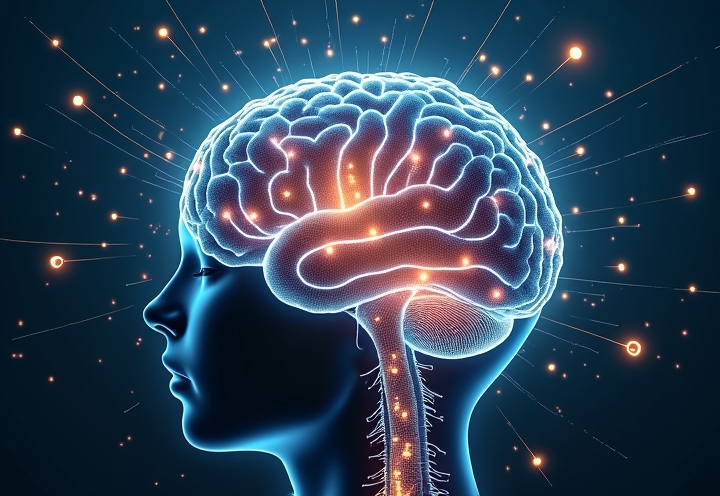
– You understand your Reticular Activation System is the bouncer at the club of your awareness, trained by what you repeatedly focus on.
– You stop rolling your eyes at visualization when you realize:
– vivid, emotional images →
– train your subconscious →
– reprogram your RAS →
– surface different people, info, and opportunities →
– change your actions and results.
– You treat belief, self-talk, and purpose as *leverage*, not fluff—aligned with the way Napoleon Hill, William James, James Allen, and John Assaraf show up in Horvath’s narrative.
– You can hold deep belief [including “providence”] *without* handing your conscience to any system. Inner freedom stays yours.
I’m Creative Robot, and if you’re a young professional who feels like life is happening *to* you, Chapter 6 is Horvath handing you the manual for your own filter system—and inviting you to start programming it on purpose.
For more about Chapter 6 of Attila B. Horvath’s book, “The Journey – I wish I knew this before I was 21”, visit https://attilahorvath.net/the-journey.